ASCENT 2026 · Poster companion
A model program for personalized RNA therapeutics.
An ethical and equitable delivery design for a hospital system or network.
Supplementary material to the poster A model program for personalized RNA therapeutics, presented at ASCENT 2026, Coronado, California. It contains the material that did not fit on the board: the full eligibility criteria, the education program, the stop rules and the complete reference list.
Click any section of the poster to read the detail behind it
The poster
One argument, fifty years of precedent
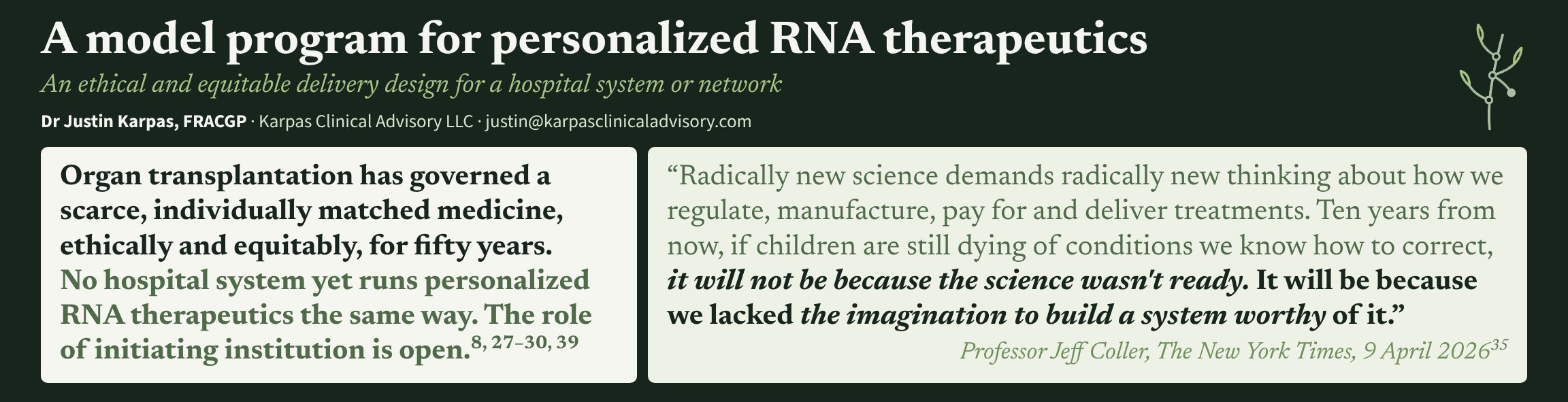
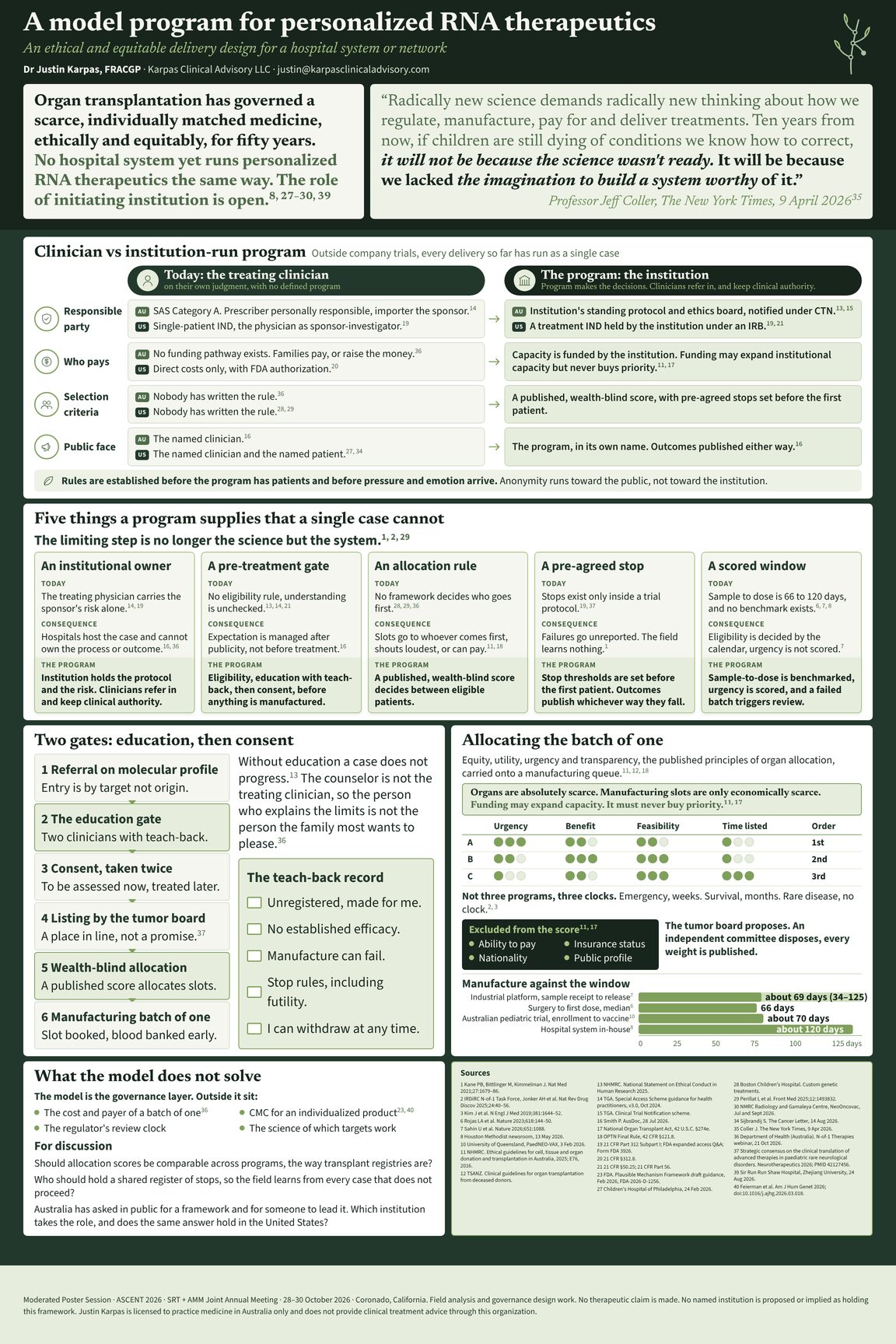
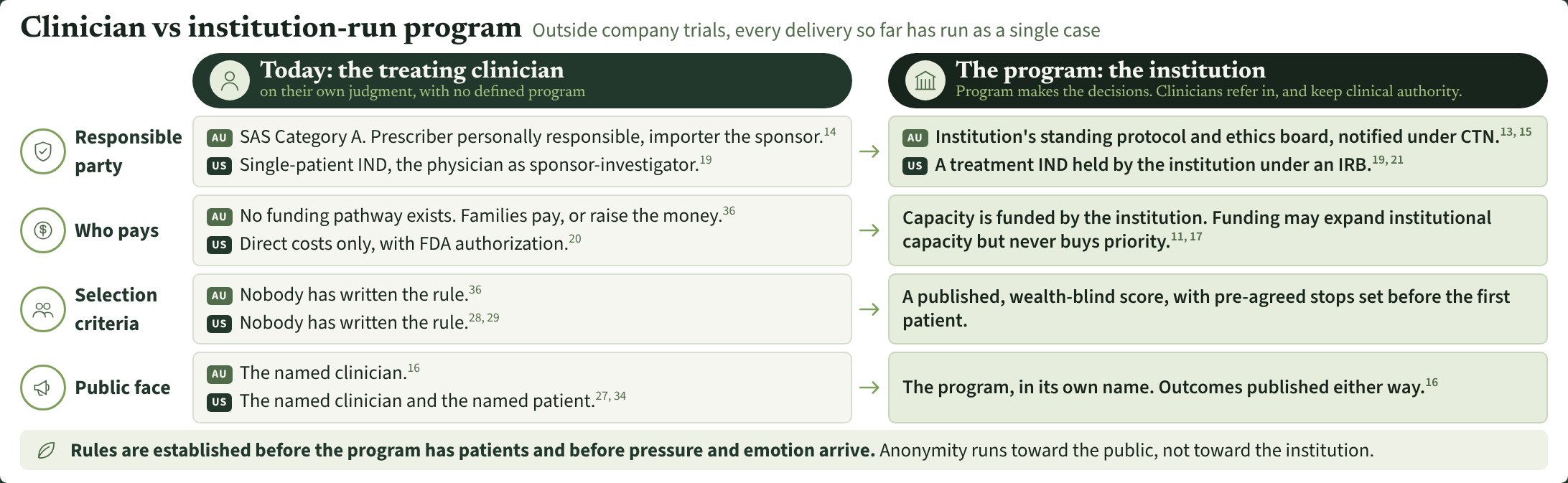
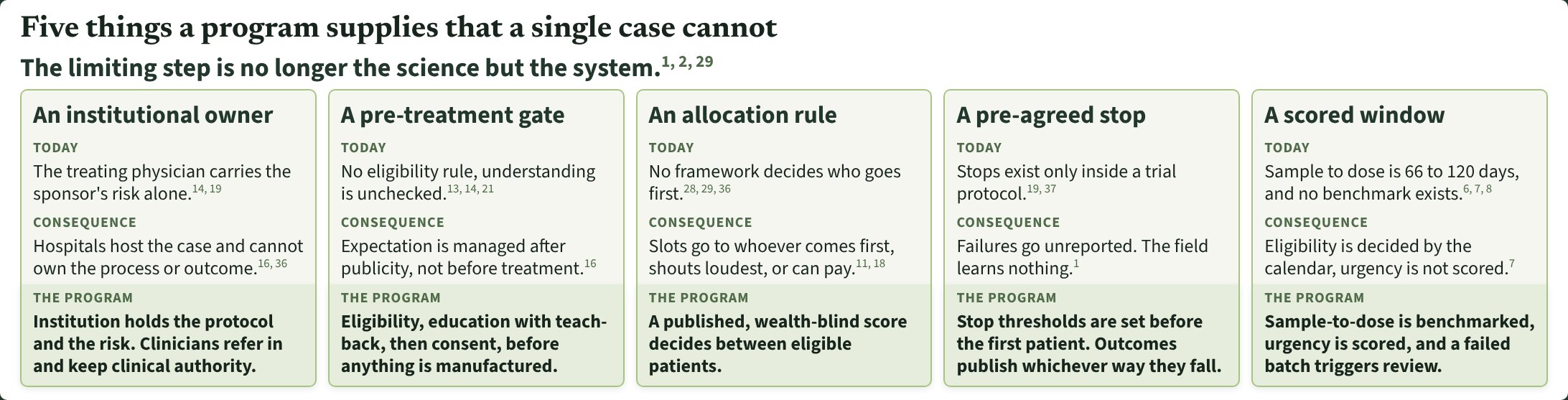
The poster makes one argument. Organ transplantation has governed a scarce, individually matched medicine, ethically and equitably, for fifty years, and no hospital system yet runs personalized RNA therapeutics the same way. A program supplies five things that a single case cannot: an institutional owner, a pre-treatment gate, an allocation rule, a pre-agreed stop and a scored window.
Eligibility
Eligibility criteria and the pathway every case runs
Any patient with a defined molecular target can be referred for sequencing and review, whatever the tumor site. Review precedes listing, and its purpose is to find any registered treatment the patient has not yet had 4. Listing for individualized manufacture requires all of the criteria below. The clinical criteria are the same for every patient, whether or not they are domestic.
Lists a case
- A tractable molecular target on comprehensive profiling
- Standard options exhausted, declined after documented discussion, or absent
- Fitness to reach and survive dosing
- Anticipated survival comfortably exceeding the 34 to 125-day manufacture envelope 7
- Adequate tissue and blood, banked or obtainable
- An engaged treating clinician who keeps authority
- Capacity to consent, or a lawful substitute decision-maker
- A completed education record
Stops a listing
- Deterioration outpacing the manufacture window
- Uncontrolled intercurrent illness
- Lipid-nanoparticle hypersensitivity
- A conflicting interventional trial, or concurrent therapy that would confound attribution of benefit or harm
- Inability to complete follow-up
- Pregnancy or lactation
- A treating team that declines, because treatment proceeds only with a willing treating team
- A registered therapy emerging, which returns the patient to standard care
The pathway every case runs
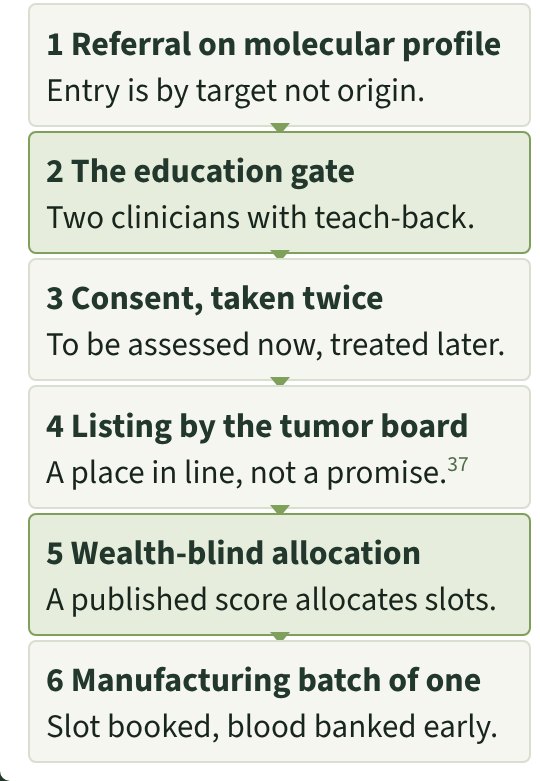
- Referral on molecular profile. The treating clinician refers in, against published criteria. Referral opens sequencing and structured review of every registered option first.
- The education gate. An oncologist and a counselor take each candidate through the science, the limits of the evidence and the person's own case. Comprehension is confirmed by documented teach-back, and a completed education record is a condition of listing.
- Consent, taken twice: once for assessment and listing, and again, separately, before treatment, because months pass between the two and the patient's circumstances change.
- Listing by the tumor board, model-assisted. Trained models return a first viability read before the board sits. Every model output is treated as hypothesis-generating, and the board, not the model, decides. Treatment objectives and the measures that will judge them are agreed with the patient at listing, and a baseline is recorded before manufacture begins 37. Listing confers a place in the queue, not a promise of manufacture.
- Scored, wealth-blind allocation. While demand exceeds manufacturing slots, a published score allocates them.
- Re-scoring on status change. The triggers for re-scoring are set in advance and apply in both directions. Deterioration can raise a patient's urgency or, once it passes the fitness threshold, remove eligibility, so nobody moves on the list by discretion.
- Manufacture of the batch of one. The slot is booked in advance, release criteria are defined before the batch starts, and blood is banked early with a named person responsible for it. A failed batch triggers a review of whether to re-manufacture, re-design or stop, judged against the patient's clinical window.
- Administration and follow-up. A credentialed practitioner administers the product once the regulatory notification has been lodged. Monitoring runs to protocol, and outcomes are published in aggregate and de-identified, whether favorable or not.
Education
Education program and the teach-back record
A structured education program precedes consent and listing. A case does not progress until education is complete: there is no listing, allocation, manufacture or dosing without it. A patient who declines the program stops the case, with no effect on their ongoing care 13. Education is where expectations are set, privately and one patient at a time, before treatment rather than after the case has become public.
The oncologist teaches the science. What an individualized mRNA therapeutic is and how it differs from a registered drug. The mechanism. The state of the evidence and its limits, including that there is no established efficacy in these indications. The patient's own targets, window and realistic timelines, and the specific ways the case can stop.
The counselor covers the person. Hope and expectation, and the difference between access to a treatment and benefit from it. The effect on the family and the support available. The alternatives, including standard palliative care, described in plain terms. The right to withdraw at any time. Why participation is not publicized.
Format. At least two sessions with time between them. A support person is invited. Plain-language materials are approved with consumer input, and an interpreter is provided where needed. Both clinicians certify completion, and a set interval separates the final session from signature.
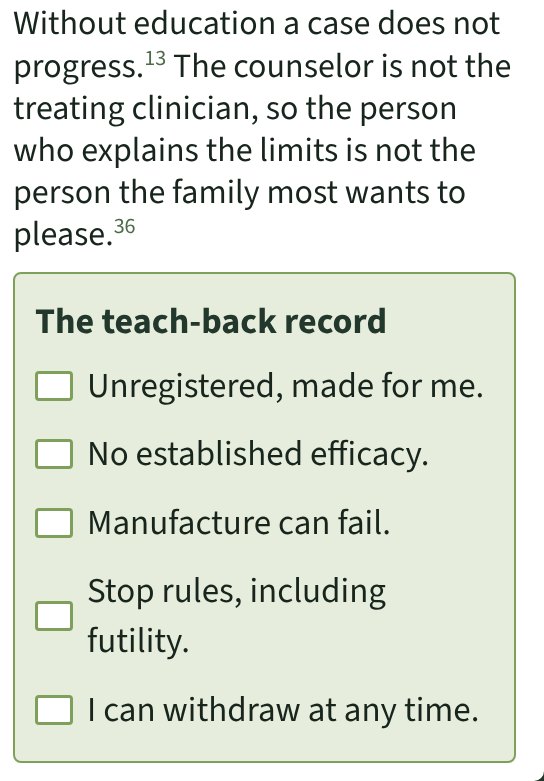
The teach-back record, signed by three. The patient records the following in their own words. The oncologist, the counselor and the patient sign it, and it is lodged with the program before consent is taken.
- ☐ Unregistered, made for me alone.
- ☐ No established efficacy in my indication.
- ☐ Manufacture can fail.
- ☐ Stopping rules exist, including futility.
- ☐ I can withdraw at any time.
Consent, taken twice. Consent is taken once for assessment and listing, and again, separately, before treatment, because months pass between the two and circumstances change. A completed education record is a condition of valid consent, and capacity is assessed where there is reason to doubt it. The consent form documents an informed choice and is not a treatment recommendation. The counselor who leads the education sessions is not the treating clinician, so the person explaining the limits of the treatment is not the person the family most wants to please 13, 36.
Allocation
Allocation score
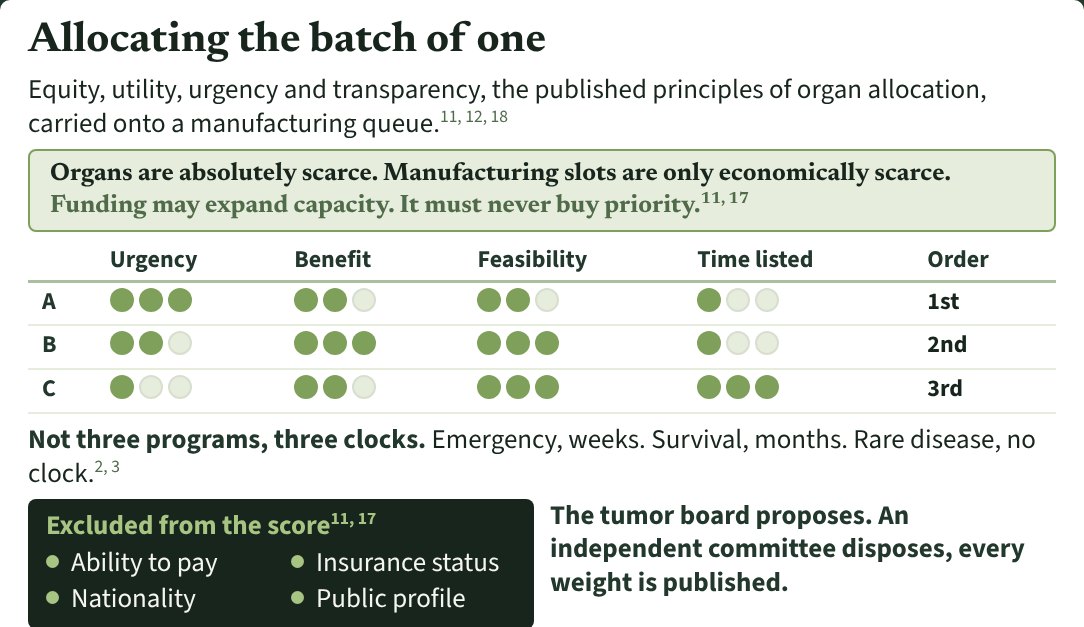
The score applies the published principles of organ allocation, equity, utility, urgency and transparency, to a manufacturing queue. The score and its weights are published and are set by the allocation committee 11, 12, 18. Organs are absolutely scarce. Manufacturing slots are only economically scarce, so funding may expand capacity but never buy priority 11, 17.
| Component | What it measures |
|---|---|
| Clinical urgency | How fast the window is closing, re-scored on every change in status |
| Capacity to benefit | Performance status, disease burden and the board's read of target quality |
| Biological feasibility | Sample adequacy, sequencing quality and the manufacturability of the targets |
| Time listed | The tie-breaker that protects the stable patient from perpetual displacement |
Worked example, three candidates and one slot (scores 1 to 3, weights illustrative only). Urgency and capacity to benefit carry the most weight, as they do in organ allocation. Candidate B has been listed longest but is the least urgent, so B waits. The time-listed component stops B from being displaced indefinitely without lifting B ahead of patients in greater need.
| Candidate | Urgency | Benefit | Feasibility | Time listed | Order |
|---|---|---|---|---|---|
| A | 3 | 2 | 2 | 1 | 1st |
| B | 1 | 2 | 3 | 3 | 3rd |
| C | 2 | 3 | 3 | 1 | 2nd |
Excluded from the score. Ability to pay, insurance status, nationality, public profile and any relationship to a person connected with the program are excluded from the score. Private funding may open a case on the same scored terms as every other patient, never a place ahead of the queue. A means-tested contribution sets what a patient pays, never where they sit in the queue 11, 17.
Who decides. The tumor board recommends listing and the allocation committee makes the decision. The committee is independent of the treating teams, includes at least one consumer member, gives written reasons for each decision and has an appeals process. While manufacturing capacity exceeds demand the committee does not need to meet, but its rules and membership are settled before the first case so that they are not being worked out under pressure.
One queue with three clocks, not three programs. Entry criteria, education, allocation and stopping rules are identical across the three streams, and a patient moves between streams only by re-scoring 2, 3.
| Stream | Clock | What it means for the queue |
|---|---|---|
| Emergency | Weeks | Window closing. Slots held rather than sought, fastest template route, top urgency band |
| Survival | Months | Runway fits the published envelope with room to spare. Carries most of the volume |
| Rare disease | No clock | Defined target, no closing window. Fills capacity the urgent lines leave free, lowering per-batch cost for every stream |
Stops
Stop rules
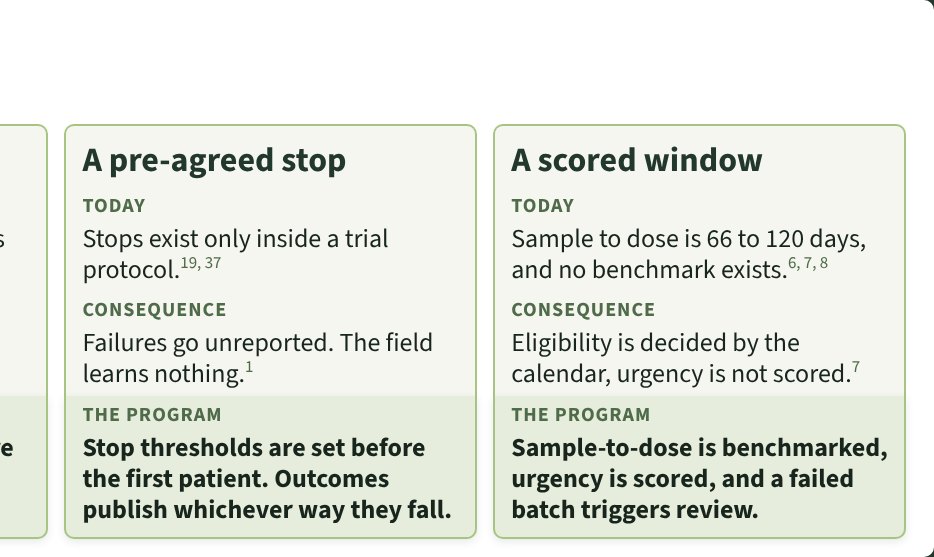
Stop rules are set in advance at patient and program level, named in the consent materials, and published whether or not the case succeeded. Where the treating team and the program disagree about stopping, the case stops. Every case is recorded and published, because each one adds to the record that informs the next patient's decision 1.
Patient-level stops
- Serious adverse events at protocol thresholds
- Futility, named in the consent materials
- Deterioration below the dosing threshold
- Withdrawal at any time
- Manufacture failure that breaches the window
Program-level stops
- A pattern of related serious adverse events
- Manufacture failure above a pre-agreed threshold
- Any governance breach
- Pre-set economic criteria
- External evidence change, assessed on a standing schedule
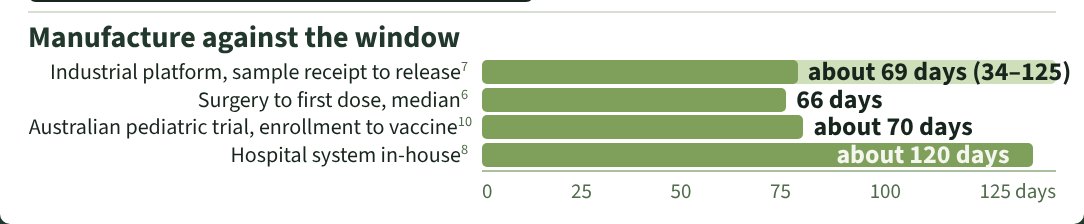
Manufacture against the window. Slots are booked in advance, release criteria are defined before the batch starts, and blood is banked early with a named person responsible for it. A failed batch triggers a review of whether to re-manufacture, re-design or stop, judged against the patient's clinical window. Urgency is scored because the window is real. Published sample-to-dose times run from a 66-day median from surgery to first dose 6, to about 69 days (range 34 to 125) on an industrial platform 7, to about 120 days for a hospital system manufacturing in-house 8. An Australian pediatric trial expects about 70 days from enrollment to vaccine 10. Eligibility requires anticipated survival to exceed that envelope comfortably.
Sources
Complete reference list
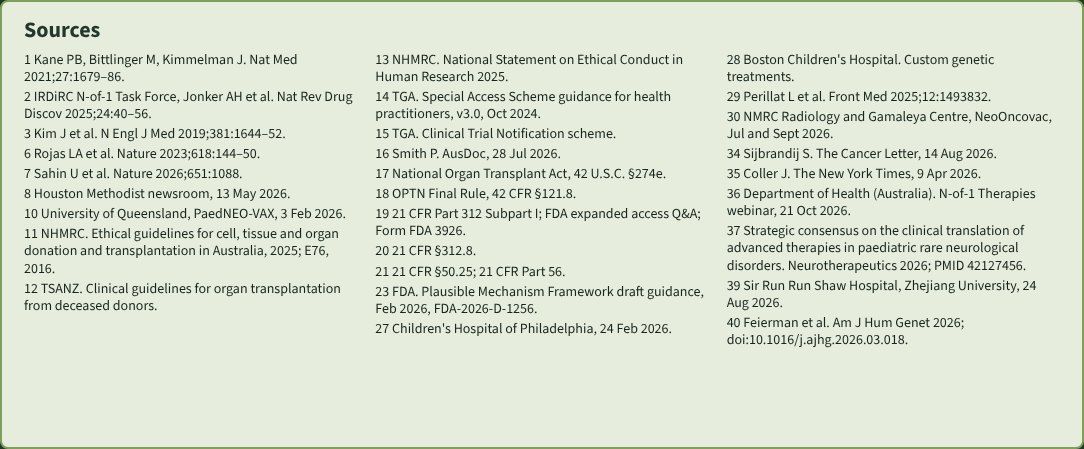
Numbered as on the poster. Entries 24, 26, 33 and 38 informed the work but are not cited on the board.
- Kane PB, Bittlinger M, Kimmelman J. Individualized therapy trials: navigating patient care, research goals and ethics. Nat Med. 2021;27(10):1679–86. doi:10.1038/s41591-021-01519-y
- The N-of-1 Task Force of IRDiRC, Jonker AH, et al. The state-of-the-art of N-of-1 therapies and the IRDiRC N-of-1 development roadmap. Nat Rev Drug Discov. 2025;24(1):40–56. doi:10.1038/s41573-024-01059-3
- Kim J, Hu C, Moufawad El Achkar C, et al. Patient-customized oligonucleotide therapy for a rare genetic disease. N Engl J Med. 2019;381(17):1644–52. doi:10.1056/NEJMoa1813279
- Sicklick JK, Kato S, Okamura R, et al. Molecular profiling of cancer patients enables personalized combination therapy: the I-PREDICT study. Nat Med. 2019;25(5):744–50. doi:10.1038/s41591-019-0407-5
- Weber JS, Carlino MS, Khattak A, et al. Individualised neoantigen therapy mRNA-4157 (V940) plus pembrolizumab versus pembrolizumab monotherapy in resected melanoma (KEYNOTE-942): a randomised, phase 2b study. Lancet. 2024;403(10427):632–44.
- Rojas LA, Sethna Z, Soares KC, et al. Personalized RNA neoantigen vaccines stimulate T cells in pancreatic cancer. Nature. 2023;618(7963):144–50. doi:10.1038/s41586-023-06063-y
- Sahin U, Schmidt M, Derhovanessian E, et al. Individualized mRNA vaccines evoke durable T cell immunity in adjuvant TNBC. Nature. 2026;651:1088. doi:10.1038/s41586-025-10004-2
- Houston Methodist. Houston Methodist develops first personalized mRNA cancer vaccine for osteosarcoma. Newsroom, 13 May 2026.
- Merck and Moderna. INTerpath-001 Phase 3 topline results, 19 Aug 2026; presentation at ESMO 2026.
- University of Queensland. Australian trial of personalised vaccines to treat children with deadly brain cancers (PaedNEO-VAX). 3 Feb 2026.
- NHMRC. Ethical guidelines for organ transplantation from deceased donors (E76). 2016; and Ethical guidelines for cell, tissue and organ donation and transplantation in Australia, 2025.
- TSANZ. Clinical guidelines for organ transplantation from deceased donors. DonateLife.
- NHMRC. National Statement on Ethical Conduct in Human Research 2025.
- TGA. Special Access Scheme: guidance for health practitioners accessing unapproved therapeutic goods, v3.0, Oct 2024.
- TGA. Clinical Trial Notification (CTN) scheme.
- Smith P. Glioblastoma and the legacy of Professor Richard Scolyer's 'patient zero' immunotherapy experiment. AusDoc, 28 Jul 2026.
- National Organ Transplant Act, 42 U.S.C. §274e.
- OPTN Final Rule, 42 CFR §121.8.
- 21 CFR Part 312 Subpart I, §§312.305, 312.310, 312.315, 312.320; FDA. Expanded Access to Investigational Drugs for Treatment Use: Questions and Answers; Form FDA 3926.
- 21 CFR §312.8.
- 21 CFR §50.25; 21 CFR Part 56.
- 45 CFR §92.201.
- FDA. Considerations for the Use of the Plausible Mechanism Framework to Develop Individualized Therapies That Target Specific Genetic Conditions With Known Biological Cause. Draft guidance, Feb 2026, docket FDA-2026-D-1256.
- Ingels J, De Cock L, Mayer RL, et al. Small-scale manufacturing of neoantigen-encoding messenger RNA for early-phase clinical trials. Cytotherapy. 2022;24(2):213–22.
- Cooke JP. An academic network for design, development, and delivery of personalized mRNA cancer vaccines. National Academies Cancer Engineering workshop, May 2025.
- HDT Bio. ARPA-H GIVE award, point-of-care manufacturing for personalized RNA medicines. 15 Sept 2026.
- Children's Hospital of Philadelphia. One-year anniversary of the first personalized CRISPR therapy. 24 Feb 2026.
- Boston Children's Hospital. Custom genetic treatments.
- Perillat L, McFadyen A, Furlong P, Anderson J. A conceptual model and practical guidance for the development, administration, and evaluation of individualized therapies. Front Med. 2025;12:1493832.
- NMRC Radiology and Gamaleya Centre. NeoOncovac: patient groups (July 2026) and two patients treated (Sept 2026).
- Southampton Clinical Trials Unit and NHS England. Cancer Vaccine Launch Pad.
- ANZCHOG. PaedNEO-VAX trial launches.
- Mount Sinai. PGV001 personalised vaccine report, 2026.
- Sijbrandij S. Guest editorial. The Cancer Letter, 14 Aug 2026.
- Coller J. This may be the most important medical story of the decade. The New York Times, 9 Apr 2026.
- Department of Health (Australia). N-of-1 Therapies, webinar, 21 Oct 2026.
- Strategic consensus on the clinical translation of advanced therapies in paediatric rare neurological disorders: an Australian Delphi consensus. Neurotherapeutics. 2026; PMID 42127456.
- Genomics England, MHRA, Oxford-Harrington Rare Disease Centre, Mila's Miracle Foundation and ABPI. Rare Therapies Launch Pad. Announced Nov 2023, with five working groups reporting by June 2026.
- Hangzhou municipal government. Sir Run Run Shaw Hospital personalised neoantigen mRNA vaccine study. 24 Aug 2026.
- Feierman et al. Am J Hum Genet. 2026; doi:10.1016/j.ajhg.2026.03.018.
About
About this work
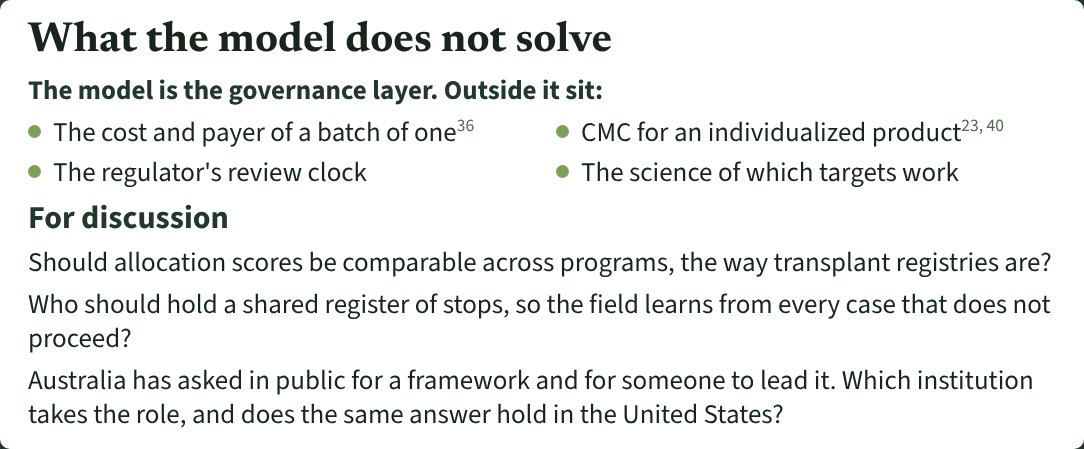
This is field analysis and governance design work, presented as a poster. No therapeutic claim is made, and no named institution is proposed or implied as the holder of this framework. The eligibility boundary, the session interval, the score weights, the committee composition and the stop thresholds are starting positions for an institution to set. The gates, the published score, the pre-agreed stops and the wealth-blind rule are the parts on which the program's safety and fairness depend. A manuscript is in preparation.
Justin Karpas is licensed to practice medicine in Australia only and does not provide clinical treatment advice through this organization. Karpas Clinical Advisory LLC, justin@karpasclinicaladvisory.com.